Akron Tree Service Trimming in Cuyahoga Falls, OH - Costs, Quotes & Local Notes
A prune should take out the right branches and leave the tree better able to hold the rest.
Pruning is the cheapest work on a tree and the easiest to do badly. A structural prune removes deadwood, crossing limbs and the weak unions that fail in a wind storm. Topping cuts the crown back to stubs and forces the tree into a flush of weak regrowth. This page covers what a proper prune includes, when to schedule it in Central Ohio, and what to ask before you sign.
| Job | Published 2026 range |
|---|---|
| Above-ground liner, full job | $700 - $2,500 |
| 16 x 32 inground liner | $2,100 - $3,000 |
| 20 x 40 inground liner | $3,000 - $5,500 |
| Refill water | $60 - $350 city, $400 - $900 trucked |
| Wall, floor and gasket repairs | $100 - $3,000 depending on scope |
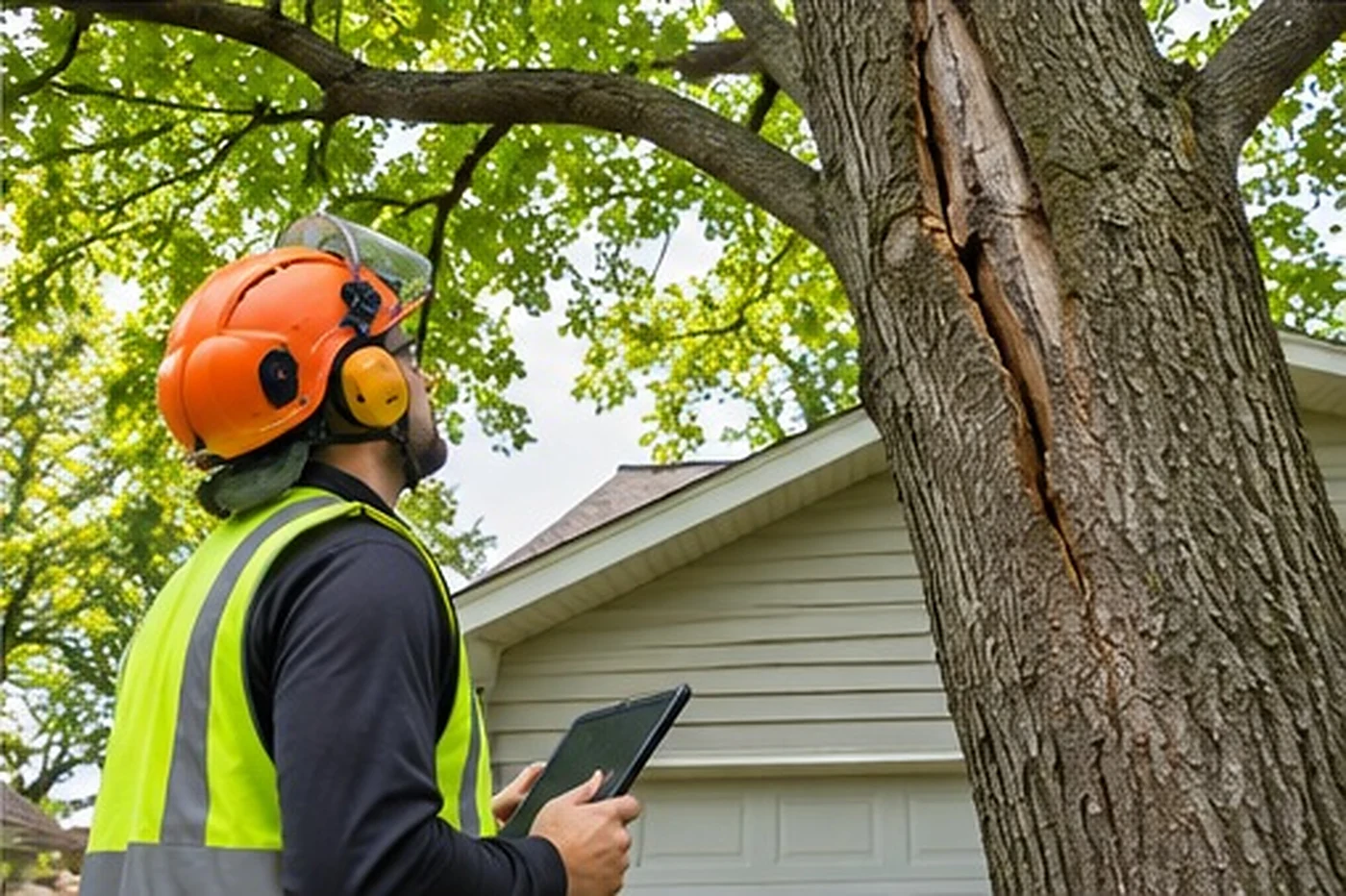
A structural prune starts with deadwood, then crossing and rubbing branches, then the co-dominant leaders that have no bark ridge between them and will split under load. Clearance pruning takes limbs off a roof line, a driveway or a service drop. Weight reduction shortens long horizontal limbs that are tearing away from the trunk.
The cut itself is the craft: a proper pruning cut leaves the branch collar intact so the tree can seal over the wound, and no stub behind. A crew that leaves stubs or flushes the cut to the trunk has made the future problem, not removed it.
Published national ranges put trimming or pruning at $400 to $900 per tree, against removal at $400 to $1,200. A prune wins on price whenever the tree is worth keeping: the same tree pruned is a fraction of the work of the tree removed, rigged and hauled.
Height and access move the number the same way they do for removal. A mature tree over a driveway with three dead limbs takes a climb and a rig; a young ornamental in an open front yard is an hour of work.
Late winter, while the tree is dormant and the limbs are visible, is the standard window. Structural pruning is easiest to judge when the crown is bare, and a dormant cut closes quickly in spring growth.
Two exceptions are worth knowing. Pruning a flowering tree just after it blooms keeps next season's flowers, and an oak pruned in the dormant season avoids the fresh wound that carries oak wilt disease. Storm damage is pruned whenever it happens, because a cracked limb over a roof does not wait for a season.
Ravine lots drop sharply to the river, so soil depth changes within a few feet of the house and root plates hold on rock in places. Trees on the slope edge fail by root-plate lift rather than by a clean trunk break, which changes how a removal has to be rigged.
Cuyahoga Falls runs its own system from 18 drilled wells in Water Works Park on the south bank of the Cuyahoga, and also serves Munroe Falls and Silver Lake. The water office is on 330.971.8130; a daytime line break goes to the stockroom on 330.971.8005, and after hours to police non-emergency on 330.928.2181.
Utility accounts: City of Cuyahoga Falls Water Utilities · 330-971-8130
Published national ranges run $400 to $900 per tree for trimming or pruning instead of removal. Height, access and the number of cuts decide where a quote lands inside that band.
Late winter, while the tree is dormant and the structure is visible. Flowering trees are pruned just after they bloom, oaks are pruned in the dormant season to avoid oak wilt transmission, and storm damage is handled whenever it happens.
As a pruning method, no. Topping forces weak regrowth and leaves stubs that decay. If the tree is too large for the space, removal is the honest option; if the problem is clearance, a reduction cut on the offending limb solves it.